
Does it matter what nursing school you go to? The quality of your nursing education is a significant factor in determining how prepared you are to pass the nursing licensure exam and to practice as an RN. It’s important to choose a school that empowers you to flourish.

Your nursing education is the bedrock of your career. A thorough, accredited program can prepare you to care for, educate, and advocate for patients. Does it matter where you get your nursing degree? It does. While all programs teach the essential nursing curriculum, they vary in how they deliver it. To set yourself up for success, choose a rigorous curriculum that also offers ample student support.
Concordia University, St. Paul’s Accelerated Bachelor of Science in Nursing (ABSN) program prepares nursing students to tackle modern challenges in healthcare by applying critical thinking skills and serving as effective advocates for their patients. If you have prior non-nursing education, you could earn your Bachelor of Science in Nursing (BSN) in as few as 16 months with our Accelerated BSN program.
Before you start nursing school, consider two questions: “What education do you need to be a nurse?” and “Does it matter what nursing school you go to?” Discover the factors to consider as you choose a nursing school, such as accreditation and NCLEX-RN pass rates. Then, make the right choice for your future.
Why Your Choice of Nursing School Matters
Nursing can be a challenging and demanding profession, potentially with lives on the line. You’ll need a solid knowledge of nursing theories, the ability to calculate dosages with precision, and the fortitude to deal with the loss of patients, among many other important skills. Does it matter where you get your nursing degree? It does, because not all nursing schools will prepare you to navigate nursing challenges effectively.
What Education Do You Need to Be a Nurse?
To become a registered nurse (RN), you must meet certain nursing education requirements. All registered nurses (RNs) need a nursing diploma or degree, such as an Associate Degree in Nursing (ADN) or a Bachelor of Science in Nursing. Either option enables graduates to take the NCLEX-RN licensure exam.
A BSN provides more comprehensive nursing education, including more immersive learning experiences. It also focuses on advanced nursing competencies, such as nursing leadership and research. Because of this, nurses with a BSN are better prepared to contribute to more favorable patient outcomes. Additionally, earning a BSN is a necessary step toward obtaining graduate-level nursing education.
Some students choose an ADN because it can be completed faster than a traditional BSN. CSP’s ABSN program, however, offers a BSN on an accelerated timeline. Students can graduate in as few as 16 months, which is less time than a two-year ADN. This flexibility is one reason to consider an ABSN when selecting a nursing program.
How does an accelerated nursing program work?
Does It Matter What Nursing School You Go To? Key Factors to Consider
To choose a nursing school and meet the nursing education requirements, consider the following factors:
Regulation, Accreditation and Program Quality
Nursing education programs must be approved by the Board of Nursing in that state. This regulatory approval allows a nursing graduate to sit for the NCLEX-RN which is the licensure exam that allows a nurse to work as a registered nurse. Accreditation is one of the most important factors to consider when choosing a nursing school. Accreditation is a reflection of program quality. It is required in some states and voluntary in others, but many healthcare employers require a nurse to be a graduate of an accredited program.
Learn more about accreditation for Concordia University, St. Paul, the baccalaureate degree program in nursing, and the Accelerated BSN program here.
NCLEX-RN Pass Rates and Student Outcomes
Student success is another indicator of program quality. Look up first-time NCLEX-RN pass rates when comparing schools. CSP Global students maintain consistently high pass rates. In 2025, our students in St. Paul, Minnesota, had an 86.92% pass rate, while our students in Portland, Oregon, achieved a 92% pass rate.
Take a closer look at the NCLEX-RN and how to pass it.

Clinical Learning and Immersive Experiences
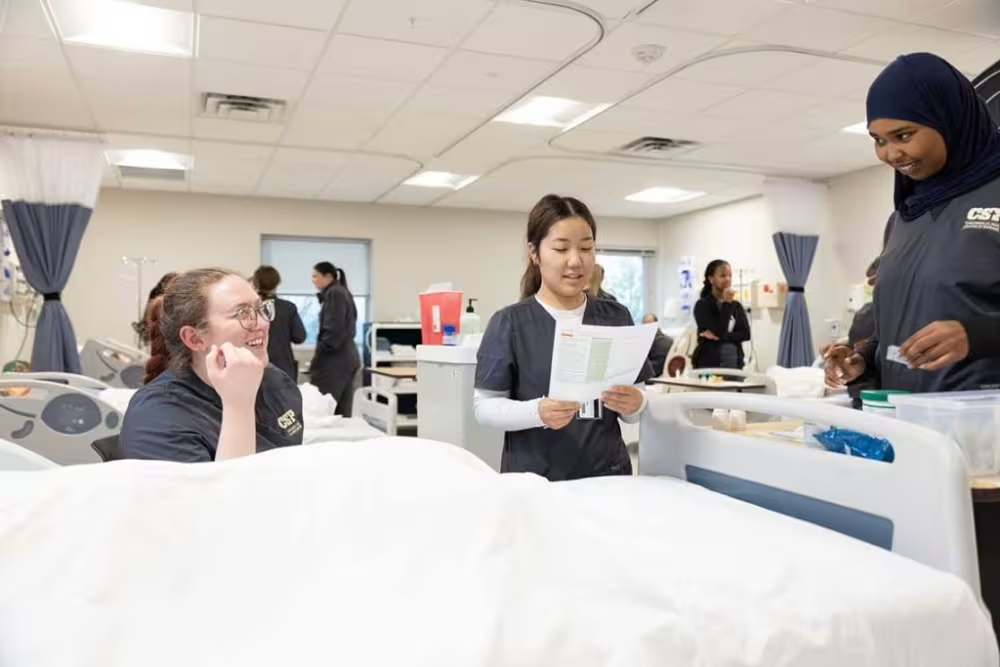
All nursing schools offer a blend of didactic coursework and applied learning experiences. Clinical learning is essential for becoming a nurse, so you’ll want to choose a nursing school that offers plenty of clinical learning experiences at a variety of clinical partners and community-based agencies. At Concordia University, St. Paul, you’ll learn key nursing skills during labs, which are paired with clinical learning experiences including simulation in various nursing specialties.
Faculty Expertise and Student Support
Does it matter what nursing school you go to? Yes, and one difference lies in faculty expertise. Choose a school with experienced faculty and robust student support resources. Not only will you receive a more thorough nursing education, but you’ll be better able to navigate nursing school. At CSP Global, you’ll receive the full support of our experienced nursing instructors, along with skills training in state-of-the-art labs.
Are All Nursing Schools the Same?
All nursing schools may confer a nursing degree upon graduation, but they aren’t all the same. Along with accreditation, program quality, NCLEX-RN pass rates, and clinical learning experiences, you’ll also want to consider the curriculum.
Some nursing schools, such as CSP Global, offer courses on emerging issues in the nursing field, such as nursing informatics. Our curriculum is also integrated with our Christian values, emphasizing concepts such as professional nursing ethics, spiritual care, and respect for cultural diversity, along with evidence-based practice.
How the Right Nursing Program Impacts Your Career
Although meeting the nursing education requirements is the top priority for launching a nursing career, there are other considerations. The right nursing school can positively influence your career by focusing on NCLEX-RN preparation and instilling a commitment to lifelong learning.
Your nursing school should also provide opportunities for building your professional network, which may help you when you’re looking for your first nursing job. For example, clinical learning experiences with reputable clinical partners can open the door to work opportunities after graduation.
How to Choose the Right Nursing Program
When it’s time to choose a nursing school, you’ll want to follow a process that includes the following:
- Figure out which type of nursing degree suits your goals.
- If you want to earn a BSN, decide whether a traditional or accelerated program is better for you.
- Identify schools in your area and consider whether you are willing to relocate.
- Research each program, comparing regulatory approvals and accreditation status, student support services, and NCLEX-RN pass rates.
- Review admission requirements and determine the financial commitment.
After narrowing your options, contact an admissions advisor. At Concordia University, St. Paul, an admissions advisor can assess your eligibility, answer questions, and help you create a personalized plan for applying.

Why Our Students Choose CSP Global
There are many reasons why our students choose to earn their nursing degree at Concordia University, St. Paul. Many enjoy the convenience of a hybrid learning experience, with easy access to online coursework. Others appreciate a fast-track path toward a nursing career, with a graduation timeline of as few as 16 months. The Christian values integrated into our curriculum, along with NCLEX-RN prep and student support, are other reasons why our students choose CSP’s ABSN program.
To find out for yourself if our ABSN program is right for you, request information from an admissions advisor today.