
A neonatal nurse cares for healthy or critically ill infants in a well-baby unit or neonatal intensive care unit (NICU), respectively. This career requires emotional resilience, calmness under pressure, and a passion for working with infants. You’ll need a nursing degree and RN licensure to get started.

What is a NICU nurse, and what does a NICU nurse do? These nurses provide specialized care to infants, including those who are critically ill. You can become a neonatal nurse by earning a nursing degree and passing the NCLEX-RN exam to obtain state licensure as a registered nurse (RN). This will qualify you to pursue nursing roles in the neonatal intensive care unit (NICU).
Concordia University, St. Paul’s Accelerated Bachelor of Science in Nursing (ABSN) program can help you become a NICU nurse sooner. Leverage your prior non-nursing college education to graduate from our Accelerated BSN program in as few as 16 months. You’ll learn all the essential skills of neonatal nursing.
When planning your career path, take a closer look at how to become a NICU nurse, including the education and licensure requirements. Learn about the important skills for a neonatal nurse and explore the salary expectations.
What Is a NICU Nurse?
A NICU nurse is a registered nurse who works in a neonatal intensive care unit. These nurses care for newborns who need specialized medical support because of premature birth, congenital conditions, birth complications, respiratory distress, or other health concerns.
The terms neonatal nurse and NICU nurse are sometimes used interchangeably, but they are not exactly the same. All NICU nurses are neonatal nurses, but not all neonatal nurses work in the NICU. Some neonatal nurses work in well-baby units caring for healthy newborns who need routine monitoring and support after birth.
Work Environments for Neonatal and NICU Nurses
In this nursing specialty, RNs typically work in a neonatal intensive care unit or similar environment. There are four levels of NICUs. Level I is the well-baby unit. A Level I unit is not actually a neonatal intensive care unit, yet it’s grouped in the category of NICUs. This is where healthy babies who were born at 35 weeks or later receive routine care and monitoring.
The well-baby unit encompasses the mother’s room, meaning that healthy babies do not need to leave their mother’s side. A neonatal RN working in a well-baby unit may treat some routine health issues, such as low blood sugar.
The other levels of NICUs are:
- Level II NICU: NICU nurses in a Level II unit care for babies born at 32 weeks or later, or who do not have a very low birth weight. These babies have non-critical medical issues and need minimal interventions, such as feeding support and warmth in the incubator.
- Level III NICU: The Level III NICU cares for babies born before 32 weeks’ gestation or who have a very low birth weight, as well as any who are considered critically ill. These infants need more intensive interventions and closer monitoring.
- Level IV NICU: The Level IV NICU provides the highest level of care to the most critically ill newborns. Here, NICU nurses care for babies needing major surgery and specialized, intensive interventions.

Learn about a similar nursing specialty, labor and delivery nursing.
What Does a NICU Nurse Do?
A NICU nurse cares for newborns who need more support than routine infant care can provide. The exact duties depend on the unit level and the baby’s condition. In some units, neonatal nurses focus on routine newborn care, parent education, and monitoring. In higher-level NICUs, nurses provide more complex care for premature, medically fragile, or critically ill infants.
NICU nurses may use advanced medical equipment, monitor infants closely, and respond quickly to changes in a baby’s condition. They may also care for newborns before or after surgery and work closely with neonatologists, respiratory therapists, and other members of the care team.
Some fundamental nursing tasks for newborn care include:
- Administering medications
- Educating parents about their baby’s condition and treatment options
- Monitoring and recording vital signs
- Providing basic care, such as diaper changes
NICU nurses also provide emotional support to parents as they navigate a difficult time.
Why Choose a Career in Neonatal Nursing?
Neonatal nursing could be the right career path for you if you’re interested in working with an at-risk patient population needing intensive care. This career path may attract those who can think calmly under pressure and provide emotional support to anxious parents. As a neonatal nurse, you’ll work as a member of a close-knit and collaborative team.
This specialty also offers a clear path for career growth. A newly licensed RN may begin in a well-baby unit or another entry-level newborn care setting, then pursue NICU roles after gaining experience. Some nurses later pursue graduate education to become neonatal nurse practitioners.
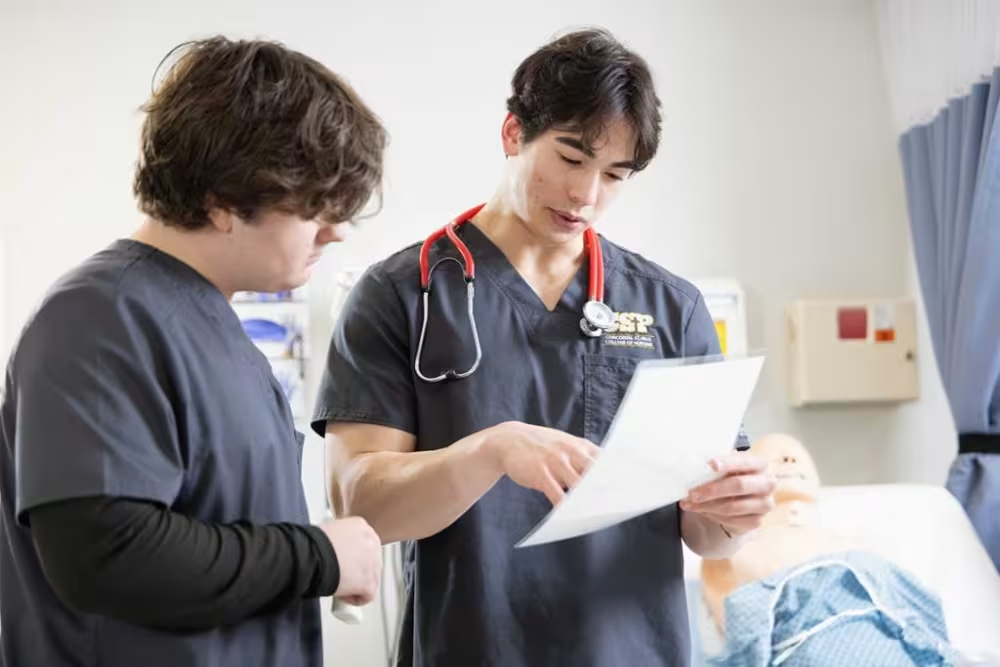
How to Become a NICU Nurse: Step-by-Step
What degree do you need to be a NICU nurse? All NICU nurses need a nursing degree, such as an Associate Degree in Nursing (ADN) or a Bachelor of Science in Nursing (BSN).
Nurses with a BSN may have more career opportunities available to them, thanks to their more comprehensive education and applied training. A BSN also provides a foundation for pursuing graduate-level nursing education and career advancement.
NICU Nurse Education and Licensure Requirements
In addition to a nursing degree, all neonatal nurses must have a nursing license. You can follow these steps to meet the neonatal nurse requirements:
- Apply to nursing school. You may be eligible to apply to CSP Global’s ABSN program if you have a non-nursing bachelor’s degree or at least 54 college credits.
- Earn a BSN. You’ll complete didactic coursework and clinical learning experiences to earn a BSN.
- Pass the NCLEX-RN. Passing this licensure exam enables you to obtain a state-issued RN license.
- Apply to nursing jobs. Start by looking for entry-level neonatal nursing jobs in well-baby units or Level II NICUs.
How Long Does It Take to Become a Neonatal Nurse?
It’s possible to earn a nursing degree in as few as 16 months with Concordia University, St. Paul’s ABSN program. Before you can enroll, you may need to complete prerequisites, which will add to the total time required. Most students take the NCLEX-RN within a couple of months of graduation. In total, it might take approximately two years to become a neonatal nurse with an accelerated program.
If you don’t have non-nursing college education, you’ll need to enroll in a traditional BSN program. These programs don’t require prerequisites. Students typically take four years to graduate, followed by a month or two for the licensure exam.
Take a closer look at the skills and qualities that help nurses succeed.

Skills That Help NICU Nurses Succeed
Hard and soft skills are among the neonatal nurse requirements. While you’re earning your nursing degree, you’ll learn the essential clinical skills of NICU nursing, including:
- Feeding and nutritional support
- Infection control
- Medication management and administration
- Respiratory care and physical assessment
You’ll also have opportunities to develop the soft skills that facilitate career success. For a neonatal nurse, these include:
- Adaptability
- Calmness under pressure
- Communication skills
- Critical thinking
- Decision-making
- Detail-oriented
- Empathy
Neonatal Nurse Salary and Career Outlook
The U.S. Bureau of Labor Statistics (BLS) projects that the job growth rate for all types of RNs will be robust for the foreseeable future. While the BLS doesn’t track employment data for this particular nursing specialty, all RNs are expected to enjoy a 6% job growth rate from 2025 to 2035, faster than average for all professions. At this rate of growth, about 194,700 jobs will be added during this period.
Similarly, all types of RNs enjoy strong earning potential. According to the BLS, RNs made a median annual salary of $97,550 as of May 2025. Salary expectations can vary based on years of experience, certifications, healthcare employer, and geographic region.

Prepare for Your Nursing Career at CSP Global
Concordia University, St. Paul delivers nursing education integrated with Christian principles to graduate compassionate, competent nurse candidates. If you have a non-nursing bachelor’s degree or at least 54 college credits, you may be eligible to apply to our ABSN program. You’ll receive thorough NCLEX-RN prep and personalized guidance throughout our accelerated nursing program.
Request info and connect with an admissions advisor to learn more about how to become a NICU nurse faster at CSP Global.