
Every State’s Favorite Cereal

Cereal is a familiar part of morning routines across the U.S. For some people, it’s even a favorite late‑night snack. While the cereal aisle looks similar from coast to coast, the most popular cereal often differs from state to state.
To explore how tastes vary by location, we analyzed Google Trends data to identify the most‑searched‑for cereal in every U.S. state and Washington, D.C., between January 2025 and January 2026. The results offer a look at national habits, while opening the door to a broader conversation about nutrition and everyday health choices.
Quick Takeaways
- Froot Loops was the most‑searched cereal overall, ranking first in 13 states.
- Rice Krispies and Cheerios tied for second, each leading in five states.
- Minnesota stood out as the only state where Wheaties ranked No. 1.
- Regional trends show clear patterns, but popularity does not equal nutritional value.
The Most Popular Cereal in Each State
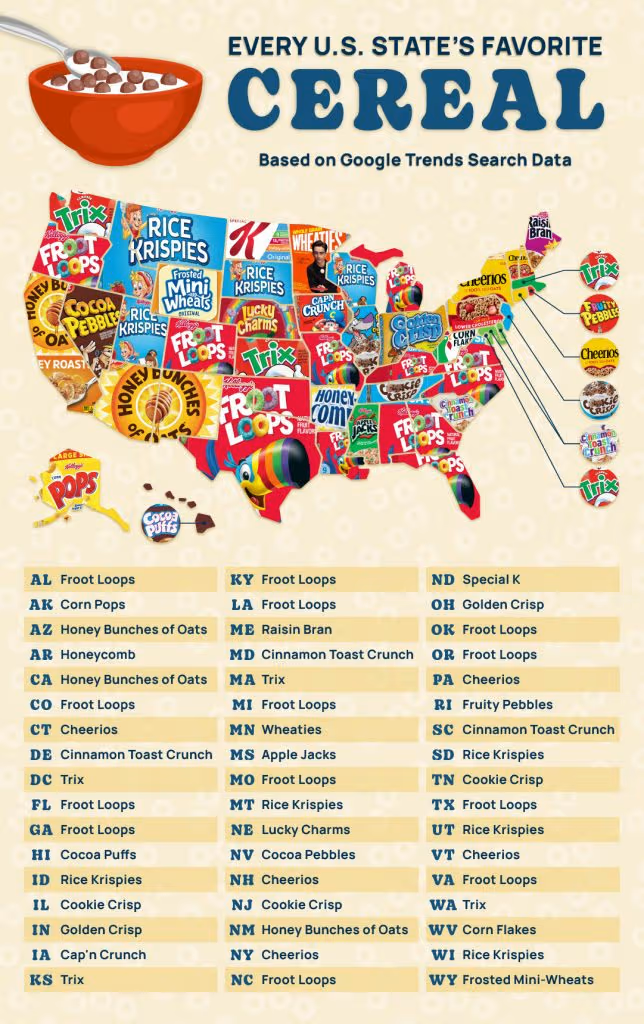
Some cereals dominate across many states, while others appear as one‑state standouts. Together, these results highlight how food habits are shaped by routine, nostalgia, culture, and curiosity. Check out the map below to see which cereal is most popular in your state.
Most Popular Cereals Nationwide
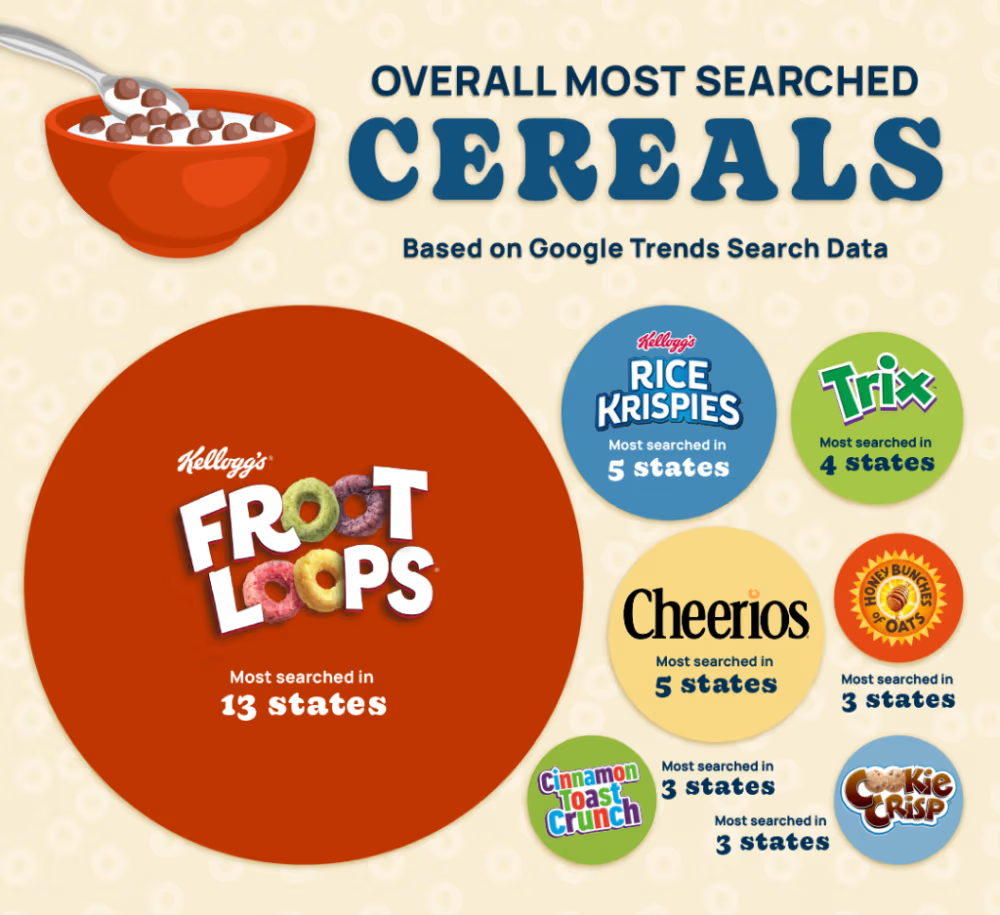
These cereals appeared most often as the top search result across the country:
- Froot Loops — 13 states
- Rice Krispies — 5 states
- Cheerios — 5 states
- Trix — 4 states
- Honey Bunches of Oats — 3 states
- Cookie Crisp — 3 states
- Cinnamon Toast Crunch — 3 states
- Golden Crisp — 2 states
Several cereals topped searches in just one state, including Cocoa Puffs (Hawaii), Cap’n Crunch (Iowa), Corn Flakes (West Virginia), and Frosted Mini-Wheats (Wyoming).
Regional Cereal Trends
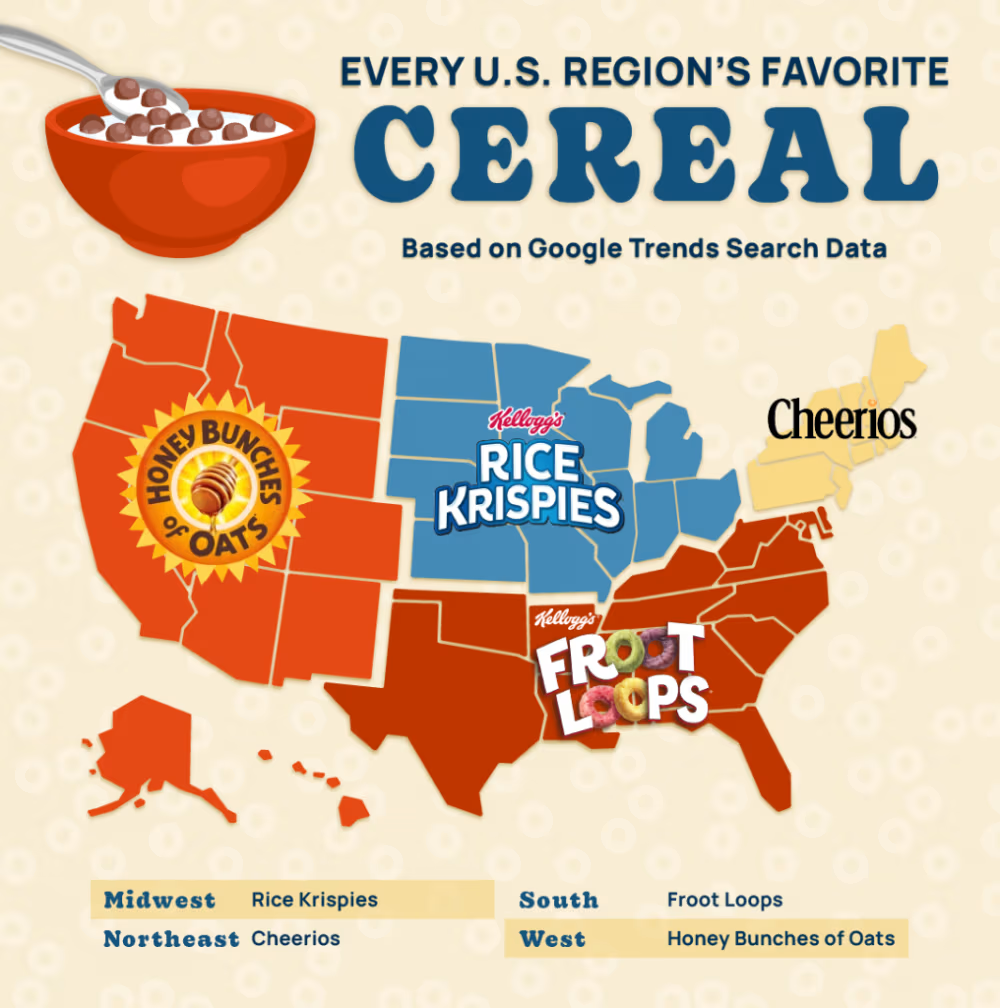
Looking at the data by region reveals a few consistent patterns:
- Northeast: Cheerios
- This perennial staple maintains strong interest in states like New York, Pennsylvania, Vermont, and Connecticut.
- South: Froot Loops
- This brand known for its tropical flavors leads in states including Texas, Florida, Georgia, and North Carolina.
- West: Honey Bunches of Oats
- This sweet and crunchy cereal leads in Arizona, California, and New Mexico.
- Midwest: Rice Krispies
- This puffed rice known for its snap, crackle and pop stands out in Idaho, Montana, and Utah.
Minnesota Spotlight: Wheaties
Minnesota’s top-searched cereal was Wheaties, and it was the only state where Wheaties ranked No. 1 in our dataset.
That result fits Minnesota’s long relationship with grain and food manufacturing: Minneapolis was once known as the “Mill City” and a global hub for flour milling, which helped fuel the rise of major cereal companies. Wheaties itself traces back to the early 1920s in Minnesota through the Washburn-Crosby Co., which later became part of General Mills.
Fun Fact: A Minneapolis radio campaign helped put Wheaties on the map. On Christmas Eve 1926, a quartet performed a Wheaties jingle on WCCO, often credited as the first radio advertising jingle.
Concordia University, St. Paul operates a learning site for its Accelerated Bachelor of Science in Nursing (ABSN) program in the Twin Cities.
How Minnesota’s neighboring states compare:
- Wisconsin: Rice Krispies
- North Dakota: Special K
- South Dakota: Rice Krispies
- Iowa: Cap’n Crunch
Oregon Spotlight: Froot Loops
Oregon’s top-searched cereal in our study was Kellogg’s Froot Loops. That result also matches the bigger national pattern in the dataset; Froot Loops was the most-searched cereal overall during the same period.
Oregon is also a part of the Concordia University, St. Paul community. CSP Global has an ABSN learning site in Portland, providing quality nursing education in the Pacific Northwest.
And while Oregon’s No. 1 search leaned colorful and nostalgic, the state has real “cereal roots,” too. Oregon agriculture includes grains like wheat and oats, and the region is home to well-known grain and hot cereal brands and processors, such as Milwaukie-based Bob’s Red Mill, which is known for hot cereals and muesli and major oat-grain processing operations in the Eugene and Junction City areas.
Fun Fact: Froot Loops has been around since 1963, and despite the different colors, the loops are all the same flavor.
How Oregon’s neighboring states compare:
- Idaho: Rice Krispies
- California: Honey Bunches of Oats
- Washington: Trix
- Nevada: Cocoa Pebbles
Healthy Eating: Making Cereal Work in a Balanced Diet
Cereal can absolutely fit into a healthy eating pattern, but the nutritional impact depends on what’s in the bowl and what it’s paired with. For nursing students and healthcare professionals, cereal is a practical example of how everyday choices affect energy, digestion, and long-term health.
What to look for on the nutrition label
- Whole grains listed near the top of the ingredient list
- Fiber, especially if cereal is the main part of breakfast
- Lower added sugars, particularly for frequent consumption
- Sodium levels, which can vary more than expected
- Realistic portion sizes
Health‑conscious cereal options many people find approachable
- Plain or lightly sweetened oat‑based cereals
- Shredded wheat or bran cereals with minimal ingredients
- Unsweetened muesli or whole‑grain flakes
- High‑fiber cereals paired with protein
If your favorite cereal is on the sweeter side
There’s no need to eliminate it entirely. Small adjustments can make a big difference:
- Mix sweet cereal half‑and‑half with a higher‑fiber option
- Add fruit for natural sweetness and fiber
- Pair with protein (milk, yogurt, nuts, or eggs) for blood sugar balance
- Use a measuring cup once or twice to reset portion awareness
Note that individual nutrition needs vary. People managing medical conditions should follow guidance from their healthcare provider or a registered dietitian.
Closing Thoughts
By examining which cereals people search for most often, we gain insight into daily habits that influence nutrition and wellness. After all, a healthy and balanced breakfast is one of the best ways to kick-start your day.
At Concordia University, St. Paul, nursing education emphasizes evidence-based thinking and real-world application by connecting everyday choices to patient health, education, and long-term well-being.
The 16-month ABSN curriculum is designed to prepare students to sit for the NCLEX-RN licensure exam and consists of three main components:
Contact an admissions counselor to learn more.
Methodology
To identify the most popular cereal in each state, we analyzed Google Trends data to determine which cereal received the highest relative search interest at the state level. The primary data point collected was search interest for individual cereals within each state.
Search terms were selected using widely recognized cereal brand lists from USA by Numbers and The Coconut Mama to ensure consistency and national relevance. Data was collected from January 2025 through January 2026, and results reflect relative search popularity rather than consumption.
Fair Use
You are welcome to use, reference, and share non-commercial excerpts of this study with proper attribution. If you cite or cover our findings, please link back to this page so readers can view the full methodology, charts, and context.