
A registered nurse can work in many different healthcare settings, including nursing homes, birthing centers, community clinics, K-12 schools, and universities. The first step to exploring where nurses work is to earn a Bachelor of Science in Nursing degree.

Of the 3.4 million registered nurses (RNs) in the U.S. workforce in 2024, about 59% of them worked in hospitals. Yet, hospitals are just one of dozens of potential workplaces for qualified nurses. If you’re thinking about making a career change to nursing, take time to explore some of the top work settings. Where do nurses work outside of hospitals? From schools to natural disaster sites, nurses fulfill an important role in many settings.
No matter where your nursing career takes you, you can get off to a good start with Concordia University, St. Paul’s Accelerated Bachelor of Science in Nursing (ABSN) program. Our program offers the opportunity to earn a BSN in as few as 16 months if you have a non-nursing bachelor’s degree or at least 54 non-nursing college credits. You can accelerate your career transition while benefiting from our faith-based curriculum.
Before working with an admissions counselor to meet all admissions requirements, take a closer look at what you can expect from a nursing career. Explore some of the possible work settings and discover why our ABSN program could be the right fit for you.
Nursing: Not Your Typical Office Job
If you are looking for a new career but are not interested in a typical office job, nursing could be a great choice for you. This field offers plenty of variety, with dozens of different nursing specialties and various work settings to choose from. If you enjoy the thought of a career where every day is different and you make a real impact, nursing has plenty to offer.
Some of the character traits that could indicate nursing is a good career choice include:
- Able to think on your feet
- Adaptability
- Detail-oriented
- Enjoy learning new things
- Enjoy working with people of all backgrounds
- Prefer doing something different each day
- Sense of humor
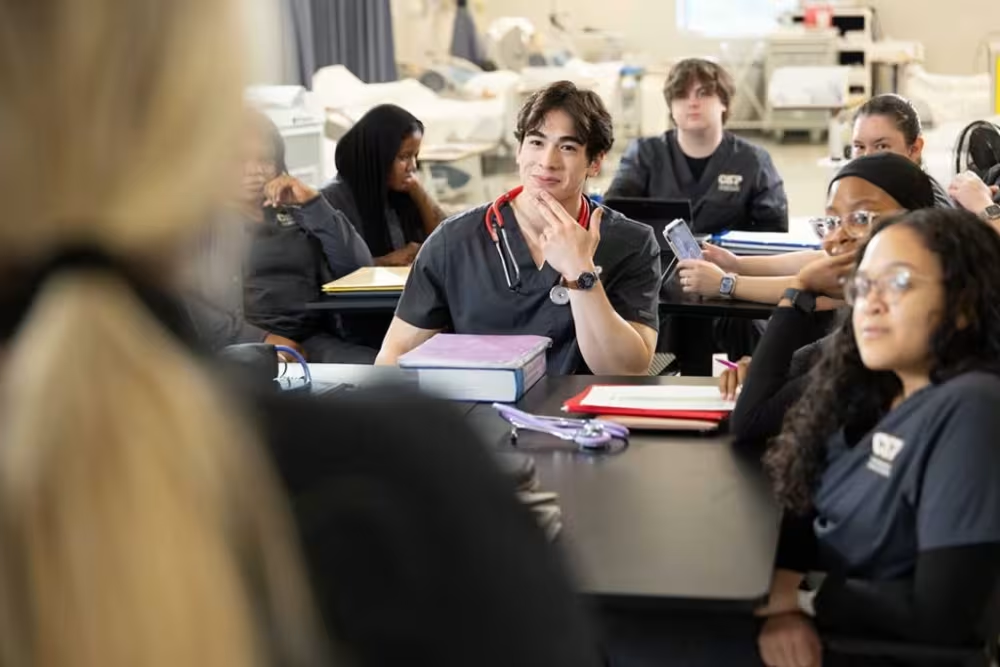
Is nursing a good career for the future? See what you can expect from this career path.
Where Can You Work as a Nurse? Common Settings to Consider
Where can registered nurses work? From birthing centers to private homes, there are plenty of nontraditional work settings for nurses to choose from.
Schools and Universities
If you’re passionate about education and child development, consider a job as a K-12 school nurse. Public and private schools hire school nurses to care for children during the school day. A school nurse’s responsibilities may include:
- Assessing injuries and illnesses and completing health screenings for vision and hearing
- Caring for students with chronic conditions including those with feeding tubes and other ongoing medical needs
- Contributing to individual education plans (IEPs) to support optimum learning
- Distributing prescribed medications provided by parents
- Ensuring students are up to date on all needed vaccinations
- Promoting school community health, such as through education and wellness programs
- Providing mental health support
- Supporting the health curricula
School nurses are also needed in postsecondary settings. At universities and colleges, school nurses handle tasks similar to those in K-12 settings, but their role in primary care may be a bit more involved. Some tasks can include:
- Administering vaccinations and providing other primary care services
- Advocating for student needs
- Assessing acute health conditions and providing immediate care
- Helping students manage chronic conditions
- Providing health education and mental health support
Some nurses work in schools but do not provide direct care to students. Nurse educators work in nursing education programs, such as CSP Global, where they use their graduate level education at the master’s and doctoral level to help educate the next generation of RNs.
Birthing Centers
Nurses who work in birthing centers may be labor and delivery (L&D) nurses or certified nurse midwives (CNMs). Birthing centers provide low-intervention labor and delivery services. They may offer water births, for example, as well as support for women who prefer a vaginal birth after C-section (VBAC). Birthing centers also offer prenatal care, postpartum support, family planning services, lactation education, and newborn care.
Community Clinics
Registered nurses can also work in community clinics providing direct patient care, typically to underserved populations. Here, the focus is on services like:
- Care Coordination and case management
- Chronic disease management
- Communicable disease reporting
- Counseling for issues such as nutrition, family planning, and substance abuse
- Epidemiology
- Health education
- Immunizations
- Patient advocacy
- Patient assessments and preventive health screenings
Some of these service providers may focus on a specific population. For example, a community clinic might focus on providing care to people experiencing homelessness.

Private Homes
At times, nurses provide care in patients’ homes. Home health nurses typically work for a home health agency and provide in-home care to patients who are:
- Dealing with a disability or temporary change in function
- Elderly
- Homebound
- Recovering from surgery
- Terminally ill
Home health nurses work with a great deal of independence but still function as part of a team that may also include home health aides, physical and occupational therapists, and social workers. They may administer medications, perform wound care, set up and operate medical equipment, and coordinate care plans.
Long-Term Care and Skilled Nursing
Nurses who work in nursing homes and other long-term and skilled nursing care settings have a significant responsibility: to care for and preserve the quality of life for one of the most vulnerable patient populations. Elderly patients in nursing homes often have complex care needs and co-morbidities, alongside mobility and other issues. Nursing home nurses provide direct patient care with an eye toward promoting their patients’ emotional health, spiritual wellness, and cognitive function. Skilled nursing provide rehabilitative care to patients recovering from changes in functioning most of whom will return to the community.
Emergency Medical Evacuation Flights
If you’re an emergency medical technician (EMT) or paramedic transitioning to an RN career, you might want to consider becoming an emergency medical evacuation flight nurse. A flight nurse is responsible for providing immediate, stabilizing care to patients experiencing severe, complex, and life-threatening medical conditions. They typically work aboard a medical evacuation helicopter, helping keep patients alive until they can reach a trauma center. This specialty requires a background in emergency or intensive care nursing and additional certification as a flight nurse but is an especially challenging and rewarding career.
Natural Disaster Sites
Disasters, such as storms, floods, and wildfires, can exact a significant toll on human lives and the health of survivors. Disaster relief nurses respond to the site of disasters to care for survivors. They provide first aid to emotionally distraught patients, along with immediate, stabilizing care for serious injuries and first aid for minor injuries. Additionally, survivors with chronic medical conditions may be left without their medications and other needed treatments. Disaster relief nurses must coordinate care and think on their feet to ensure survivors get the help they need.
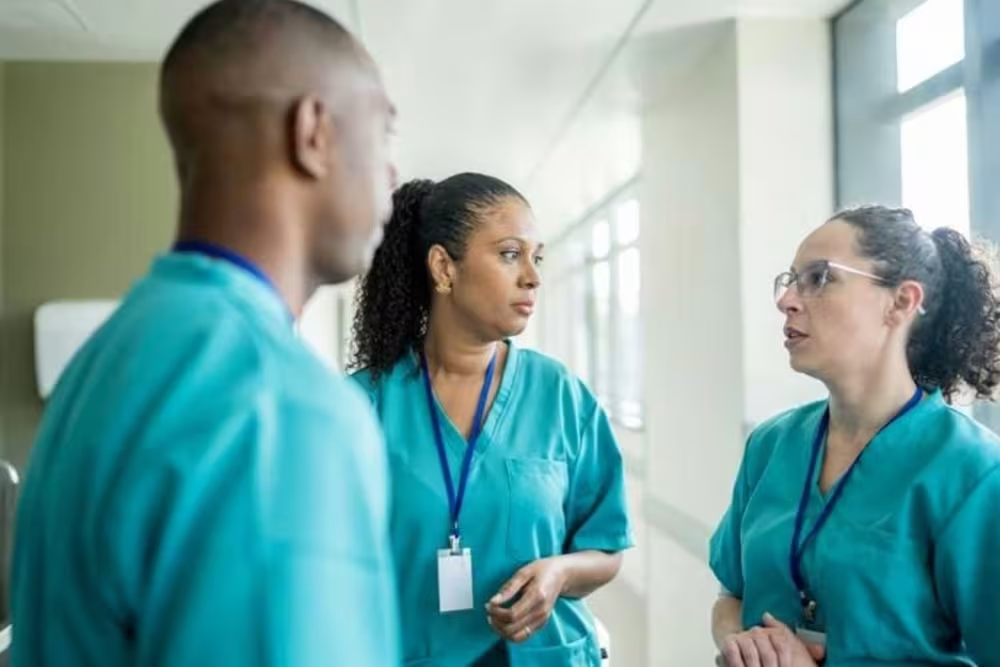
Take a closer look at the role of a disaster nurse in relief efforts.
How Different Environments Shape Nursing Roles
Outside of the hospital, the care setting dictates the kind of care a nurse must provide.
In home health, for example, nurses must have strong nursing knowledge and independent decision-making skills, as they are typically the only RN on site at any given time. In nursing homes, RNs often spend time educating family members and providing emotional support. At disaster sites, nurses must be capable of thinking on their feet and working with limited resources under difficult field conditions.
As you consider where your nursing career might take you, think about your personal characteristics and traits to determine which setting you’re likely to thrive in.
How ABSN Programs Prepare Students for Diverse Careers
Concordia University, St. Paul’s ABSN programs provide effective preparation for nursing students interested in any work setting or specialty. CSP Global offers a comprehensive, rigorous curriculum that teaches nursing fundamentals, including:
- Adult, pediatric, obstetric, and aging population care
- Health assessment
- Mental Health
- Nursing leadership
- Nursing informatics
- Pathophysiology
- Pharmacology
- Population Health
These nursing fundamentals are important no matter which work setting or nursing specialty you choose.
Additionally, you’ll benefit from multiple clinical learning experiences, where you can apply the skills you’ve learned in class while caring for actual patients in healthcare facilities. You’ll gain experience in different clinical environments, which will prepare you to work across various settings as a professional nurse.
Get Your Start as a Nurse at CSP Global
Where do nurses work? Once you have an RN license, you can pursue work in dozens of different settings. Concordia University, St. Paul can empower you to build an exciting career in nursing through our ABSN program. Graduate in as few as 16 months and benefit from practical training combined with extensive NCLEX-RN prep.
Contact an admissions advisor today to learn more and start the admissions process.