
You may be wondering, What are nursing clinicals? In CSP Global’s ABSN program, you will apply your foundational nursing knowledge while gaining valuable experience in nursing clinicals. This will allow you to practically apply information from your nursing coursework and will prepare you for your future nursing career.
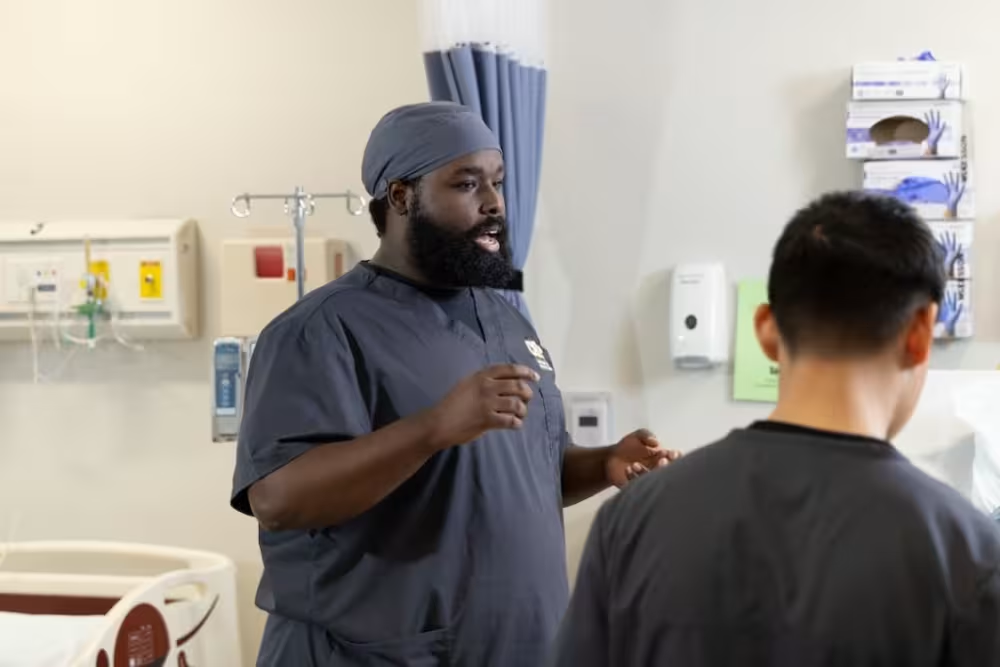
At Concordia University, St. Paul, some of our nursing courses are offered online which enables you to review the material as many times as needed to understand and apply what you’ve learned. Yet, becoming a nurse requires more than conceptual knowledge; it also requires an applied patient care experience. That’s why nursing programs like Concordia St. Paul’s Accelerated Bachelor of Science in Nursing (ABSN) program include clinical learning, also known as clinicals or nursing clinicals.
What are nursing clinicals? They’re a learning component in healthcare facilities or community-based agencies that allows you to work directly with patients while you’re still a nursing student. They can be intimidating but also an exciting part of nursing school as you prepare to launch your career.
While you’re planning to start nursing school, you’ll want to learn more about clinicals and get the answers to common questions, such as:
- What are nursing clinicals’ benefits for students?
- Why are clinicals important?
- What do you learn in clinicals?
You should also learn how you can prepare for them and what supplies you’ll need.
What Are Clinicals in Nursing School?
Knowing how clinicals fit into your degree program can help you fully understand the definition and role of clinicals. Your nursing education at Concordia University, St. Paul consists of three main components:
Coursework teaches nursing theories and concepts. Skills labs develop nursing skills, such as placing an IV line and working through patient care situations. Clinicals allow you to take everything that you’ve learned in coursework and labs and put that knowledge into practice in actual healthcare facilities and community-based agencies.
At CSP Global, you’ll begin clinicals in the first semester. The curriculum is progressive, meaning your responsibilities during your first clinical will correspond to what you’ve been taught so far in your coursework and labs. You won’t be required to handle complex nursing tasks until you’re ready.

Learn more about the fact that nursing is a good career.
What to Expect in Nursing Clinicals
Clinicals are supervised, practical experiences that form the core of your nursing education, exposing you to different patient populations in various practice settings including the community. The length of clinical learning varies, but you can expect to be enrolled in two to three clinicals per semester. Clinicals are equivalent to one to five credits, and one shift may last up to 12 hours.
Starting clinicals in the first semester is unique to the ABSN program. Traditional four-year BSN students typically don’t begin clinicals until their third year. With an earlier start, you can apply the material you learn from the online courses and skills labs directly to your clinicals.
You will complete clinicals with an array of focuses throughout your time in CSP Global’s nursing program. These focuses include:
- Population health
- Holistic mental health nursing care
- Medical-surgical
- Women’s health
- Pediatrics
You can expect to learn by doing during your clinicals. Some of the nursing skills reinforced in clinicals include:
- Documentation of nursing care
- Development of nursing care plans
- Medication administration
- Patient assessments
- Therapeutic communication
- Monitoring vital signs and other diagnostics
- Wound care
Clinicals are active learning environments where you and other students in your cohort perform care management a nurse would typically complete daily. Our clinical placement sites include:
- Hospitals
- Mental health facilities
- Outpatient clinics
- Community-based agencies
Working in numerous clinical settings will help you become a more well-rounded nurse. You will experience what it is like to treat patients of all backgrounds as you diversify your knowledge through clinical experiences.
This will also help you decide where you might want to work after graduation. You will have options both inside and outside the hospital setting. For some, the fast-paced environment of the emergency department is ideal, while others prefer working in labor and delivery with mothers and newborns. Working outside the hospital in an independent family practice could be the best choice for others. Your experience in clinicals will help you discover what path you would like to take after graduating before committing to a full-time job.

Role Transition
During your final semester, you’ll participate in a role transition experience. This may involve working one-on-one with a nurse preceptor or learning as part of a clinical group. This final learning experience is designed to help you refine your skills and build rapport with patients; you’ll take an active role in their care. This will help you gain confidence as you prepare to gain licensure and enter the workplace after graduating.
Why Clinical Learning Is Essential for Nursing Students
Clinical learning bridges the gap between theoretical knowledge and practical application. They allow you to refine your nursing skills while learning to work with patients and fellow clinicians.
You’ll also learn how to navigate the clinical environment, such as following proper hospital protocols. Furthermore, clinicals provide exposure to different nursing specialties, which can be valuable when planning your career.
How to Prepare for Nursing Clinicals
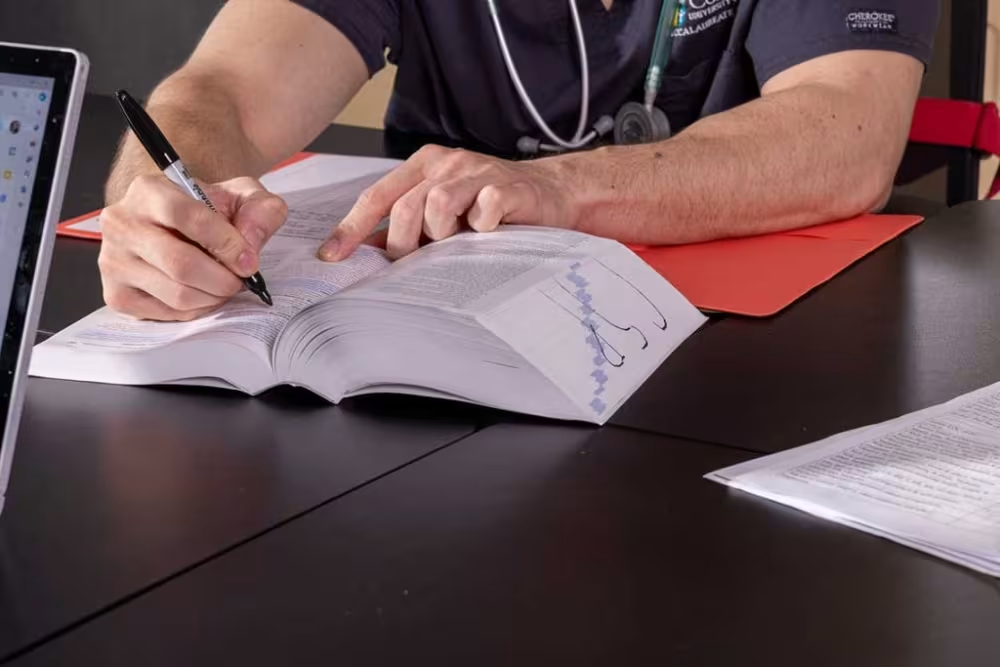
Your nursing clinicals will give you realistic experience as a nursing professional, so you must prepare accordingly. CSP will provide guidance about the uniform, shoes, and materials you will need to be successful in your clinical learning experiences. One of the best ways to prepare is to stay caught up on content in your online and laboratory courses so that when opportunities in the clinical setting present themselves, you are ready to take advantage of them.
Start Your Nursing Journey
As an accelerated nursing student, you’ll clock many hours of immersive practice in your clinical learning that will help you to emerge from nursing school as a fully equipped, confident nurse. At Concordia University, St. Paul you can expect a supportive, personalized learning experience. You’ll have access to attentive instructors, dedicated academic advisors, and NCLEX-RN prep resources.
If you have a non-nursing bachelor’s degree, you could earn your BSN in as few as 16 months. Contact an admissions advisor today. Our ABSN program offers three start dates a year in January, May, and September.