
Are you thinking of switching to nursing as a second career, but wondering, Is it too late to become a nurse? You should know that becoming a nurse later in life is entirely possible. In fact, older nursing students benefit from having well-developed soft skills and more life experience.
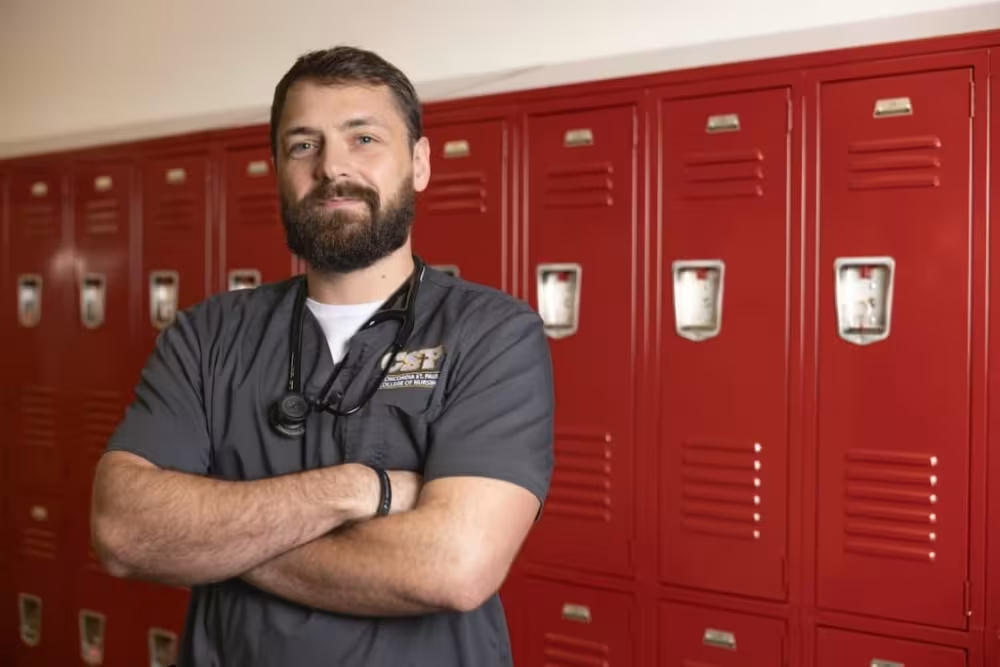
Many people are actively looking for their next job, either in their original field or a new career path. Whether because of interest in a different field, the desire for a higher salary, or the pursuit of career advancement opportunities, switching to a career in nursing can be a good fit for many professionals. But is it too late to become a nurse if you’re 30, 40, 50, or even older?
It’s almost never too late to become a nurse. If you’re interested in becoming a nurse later in life, Concordia University, St. Paul’s Accelerated Bachelor of Science in Nursing (ABSN) program can help you achieve your goal. Designed specifically for career switchers, our ABSN program allows you to leverage your prior non-nursing education toward earning a BSN in as few as 16 months after completing any needed prerequisites.

Is nursing a good career for you? See some of the many career possibilities to pursue.
While you’re thinking about making a career change, consider the many reasons to make the switch and the benefits of pursuing a career in nursing. Then, take a closer look at what you can expect and how our ABSN program can support you along the way.
Why It’s Never Too Late to Become a Nurse
There is no age limit to becoming a nurse, and plenty of registered nurses (RNs) transition to nursing later in life. If you have the drive to navigate nursing school and work with patients, you have the potential to succeed as an RN. Keep in mind that not all nursing specialties require long shifts on your feet or physically demanding tasks, such as assisting patients with mobility.
Nursing can be an ideal second career. Even if you join the profession later in life, there will still be opportunities to pursue career advancement. For example, after gaining some clinical experience, you might step into a role as a charge nurse. If you decide to pursue advanced nursing education and training, you might consider roles such as nurse educator, nurse researcher, nurse administrator, or advanced practice registered nurse (APRN).

What do nurses do all day? Discover the main roles and responsibilities of nurses.
Nursing as a Second Career: Why More Adults Are Making the Switch
There are plenty of reasons to consider becoming a nurse later in life. Whether you’re an established professional or you’ve been a stay-at-home parent for years, chances are you’ve got plenty of soft skills that can translate well to a nursing career. Some of the most important soft skills and character traits include:
- Advocacy
- Commitment to lifelong learning
- Communication
- Critical thinking
- Empathy and compassion
- Problem-solving
- Servant leadership
- Teamwork
Of course, nursing also requires technical skills, and you’ll learn everything you need to know in CSP Global’s ABSN program.
Choosing nursing as a second career offers distinct benefits over any other career possibility. Some reasons why people switch to nursing include:
- Strong earning potential
- Opportunities for career advancement
- Diverse nursing specialties and work settings to choose from
- Robust job growth rate due to the ongoing nursing shortage and other factors
- Engaging and intellectually stimulating work; no two shifts are alike
Becoming a Nurse Later in Life: What to Expect
Doing research can help you learn what to expect as you transition to a nursing career. Some factors to consider include the following:
Length of Time
An accelerated nursing program like CSP Global’s can indeed help you transition to your next career more quickly. Keep in mind that the 16 months it takes to earn a BSN is not the total length of time required to become a nurse. You may need to complete some prerequisite courses prior to enrolling, and you’ll need to complete other admission requirements, such as the ATI Test of Essential Academic Skills (TEAS) exam which measures basic high school proficiency in reading, mathematics, science, and English usage and grammar. After graduating, you’ll need to pass the NCLEX-RN to obtain a nursing license.
Nursing Cohorts
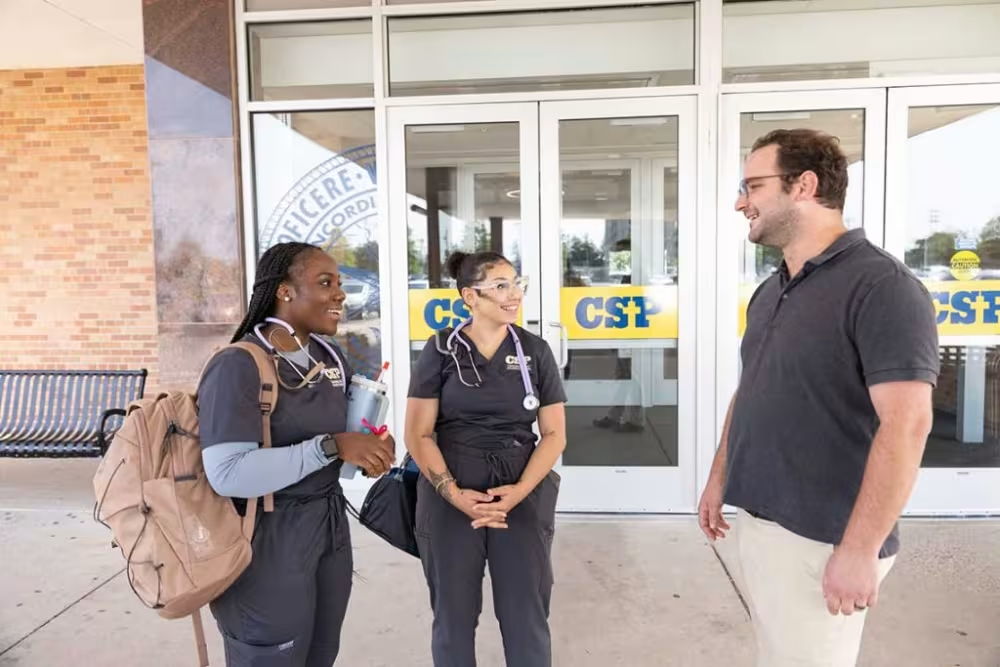
One common concern shared by older nursing students is whether they’ll feel out of place in a bachelor’s degree program. At CSP Global, our nursing cohorts are diverse, composed of students from various backgrounds and a range of ages. It’s quite common for our nursing cohorts to include older nursing students, and you’ll find our learning environment to be welcoming.
School-Family Balance
Another consideration is the effect that nursing school may have on your school-life balance. At Concordia University, St. Paul, we encourage nursing students to think of nursing school as a full-time job. It requires a considerable commitment of time and effort, so you may need to cut back on other responsibilities during this time. Before enrolling, consider asking your loved ones for help with family responsibilities like childcare.
How an Accelerated BSN Program Helps Career Changers
Concordia University, St. Paul supports career changers by offering an accelerated pathway toward a nursing career. If you have a completed non-nursing bachelor’s degree or at least 54 non-nursing college credits, you may be eligible to earn your BSN in as few as 16 months instead of spending four years in a traditional BSN program. Your BSN enables you to take the NCLEX-RN exam, which is necessary for licensure as an RN. The accelerated timeline means you can reenter the workforce much more quickly.
CSP’s ABSN program further supports career switchers by making nursing education more accessible. We offer a hybrid learning experience that provides greater flexibility for adult learners. Our online coursework teaches nursing theory. You’ll also complete in-person learning components, including nursing skills labs, where you’ll learn key nursing skills like placing IV lines and physical assessment.
Lastly, you’ll complete clinical learning experiences at local healthcare facilities and community-based agencies. These clinicals provide an immersive experience. You’ll learn by taking on increasingly complex nursing tasks, working with actual patients alongside experienced nurses, your nursing faculty, and, in some instances, a preceptor.
Steps to Transition Into Nursing at Any Age
One of the first steps toward pursuing nursing as a second career is to call the admissions advisors at Concordia University, St. Paul. During this call, you can discuss your eligibility, learn more about the program, and get all your questions answered. Your dedicated advisor will help you put together a plan for applying, including completing any needed prerequisites.
If accepted to the program, you can complete your BSN in as few as 16 months upon enrollment. Your next step to transition into nursing is to pass the NCLEX-RN. Students generally take the exam within several months of graduation. Once you’ve passed it, you can obtain your RN license and apply to nursing jobs in your chosen nursing specialty.
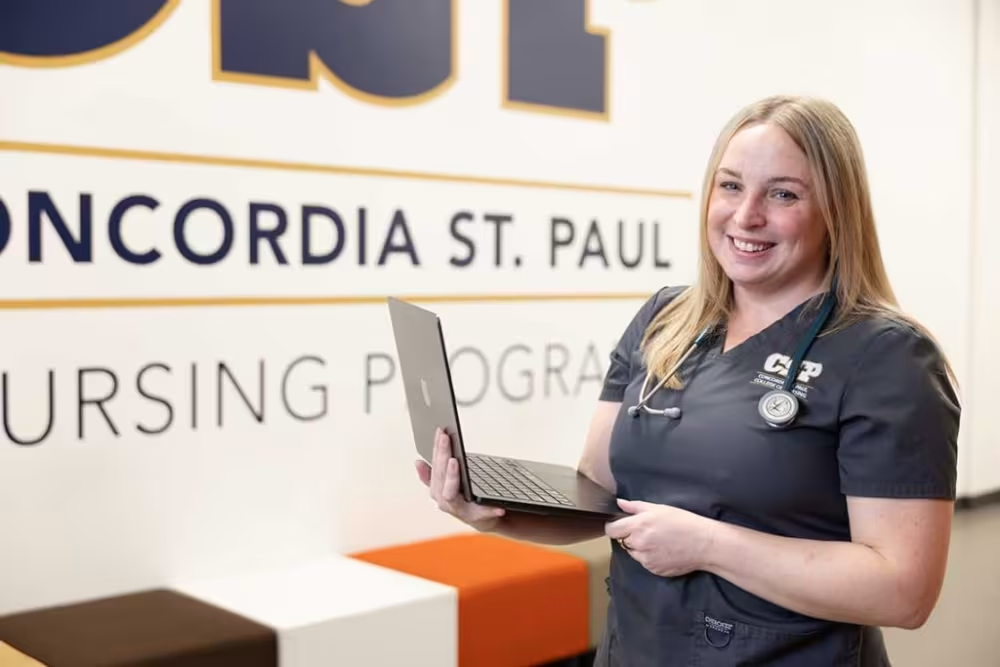
Follow these steps to get into nursing school.
Concordia University, St. Paul Welcomes Future Nurses of All Ages
CSP Global welcomes diverse nursing students of all ages, from transfer students to career switchers with decades of non-nursing work experience. Our ABSN program, which integrates Christian principles into our comprehensive curriculum, provides extensive support to help our students succeed.
We offer a hybrid learning experience that provides greater flexibility to older students, many of whom are raising families while attending school. Our ABSN instructors prepare our students to serve the needs of a culturally diverse population with integrity, following evidence-based nursing practices aligned with modern standards.
Contact an admissions advisor today to learn more about attending our ABSN program.